Sesame Soba Noodles
Let Me Tell You Why I Love Making Sesame Soba Noodles
Okay, you know those evenings when you come home, dog-tired, can barely find matching socks, and somehow everyone is already asking, “What’s for dinner?” That’s where Sesame Soba Noodles slide in like a little hero. I’ve been making this dish since college, sometimes in a borrowed saucepan that probably saw more burnt popcorn than noodles. Anyway—nothing quite beats the flavor punch you get for so little effort. Plus, it reminds me of that one summer in Osaka (long story, but let’s just say, I learned a lot more than how to properly boil noodles).
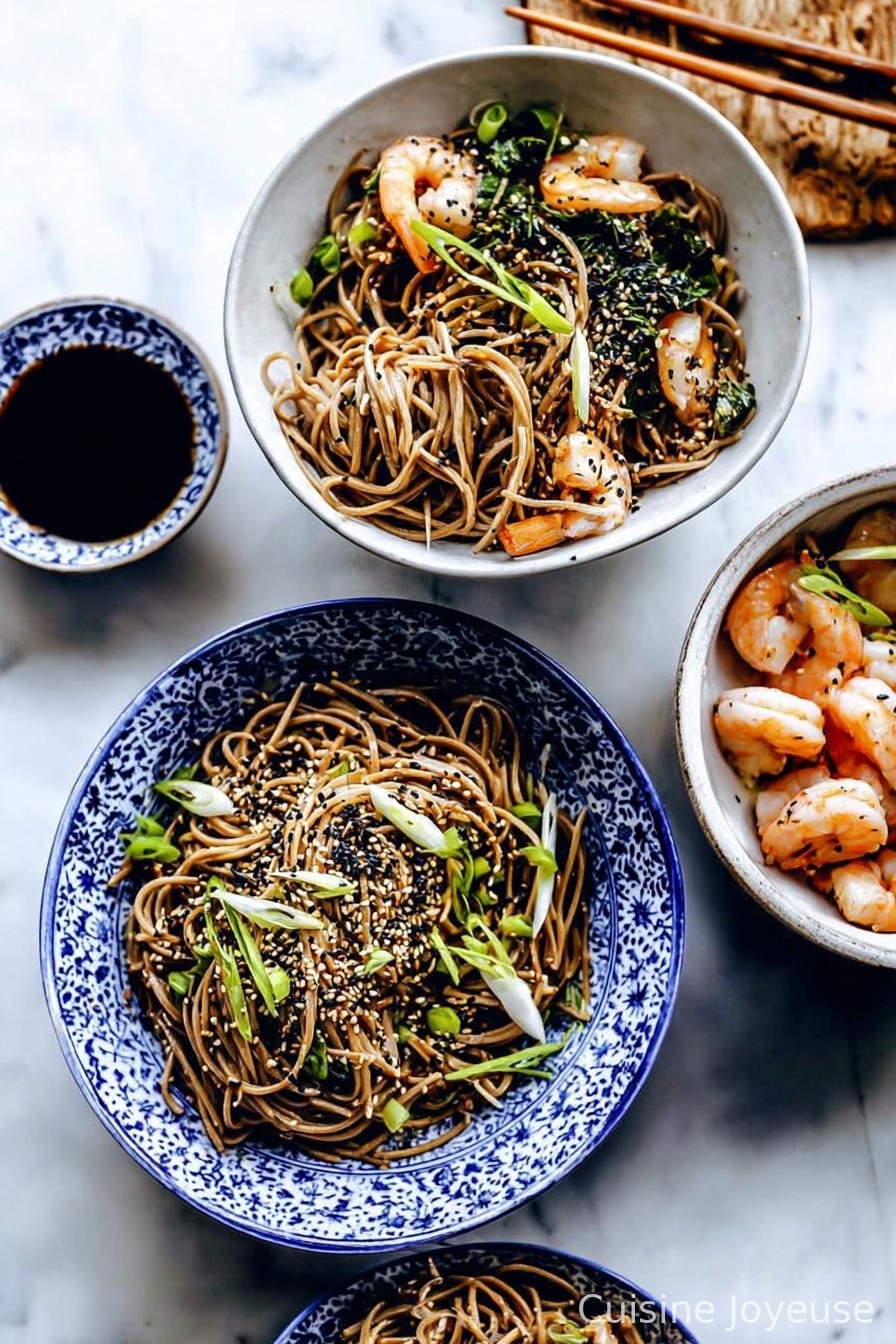
Why I Think You’ll Love These Noodles
I tend to pull this recipe out when:
- Someone’s grumpy and only a noodly dinner will do
- I need to clean out the veggie drawer
- I just want something cozy but not boring (which, let’s be honest, is most nights).
My family requests these at least once a week. Sometimes my youngest will try to eat all the crispy bits of garlic right out of the mixing bowl—then claim she’s just “testing for quality.” I used to always mess up the sauce ratio (once ended up with a tragic soup), but now it’s basically second nature.
What You’ll Need (and What I Sometimes Switch Around)
- 225g dried soba noodles (buckwheat, but I’ve cheated with spaghetti—nobody ever guesses)
- 2 tablespoons toasted sesame oil (sometimes I do a mix of sesame + mild olive oil if I’m running out; don’t tell anyone)
- 3 tablespoons soy sauce (grandma swore by Kikkoman, but I grab whatever’s cheapest nowadays)
- 1 tablespoon rice vinegar (or a generous squeeze of lime if my fridge is being difficult)
- 1 tablespoon honey (or maple syrup, which I’ll admit gives it a nice twist, though the kids notice)
- 2 teaspoons grated ginger (a knobbly thumb-sized piece; powder in a pinch, but fresh is totally worth it)
- 2 garlic cloves, thinly sliced (okay sometimes I get lazy and use the jar stuff—shhh!)
- 1 small cucumber, julienned (carrot strips also work, or whatever veg needs using up)
- 2 spring onions, thinly sliced
- 1 handful fresh coriander leaves (or skip if you’re not a fan; parsley kinda works in a pinch but it’s…different?)
- Generous sprinkle of toasted sesame seeds
- Optional: chili flakes, shredded roast chicken, or tofu for extra protein
Here’s How I Make Them (With a Few Honest Moments)
- Bring a big pot of water to a boil, and add the soba noodles. Cook according to the package—usually about 4-5 minutes. You want them just soft but not mushy. Rinse them under cold water to stop the cooking (and get rid of extra starch—it makes them much less gloopy!).
- While the noodles cool, whisk together sesame oil, soy sauce, rice vinegar, honey, and grated ginger in a largish bowl. This is where I usually taste, realize I forgot the soy sauce, and add it in with a flourish.
- Heat a little more sesame oil in a small pan and fry the garlic slices until golden and crispy. Careful—they go from golden to burnt in about ten seconds, trust me, I’ve been there. Lift them out and let them drain on some paper towel.
- Tip the rinsed noodles into the sauce bowl, toss to coat. It may look too runny at first, but it thickens up—don’t panic.
- Add cucumber, spring onions, coriander, and toss again. I occasionally add a bit more soy or a sprinkle of chili flakes here, depends on the day.
- Top with crispy garlic and a good sprinkle of toasted sesame seeds. If you’ve got some roast chicken left from last night, or a few cubes of tofu, throw those on. Or not—totally your call.
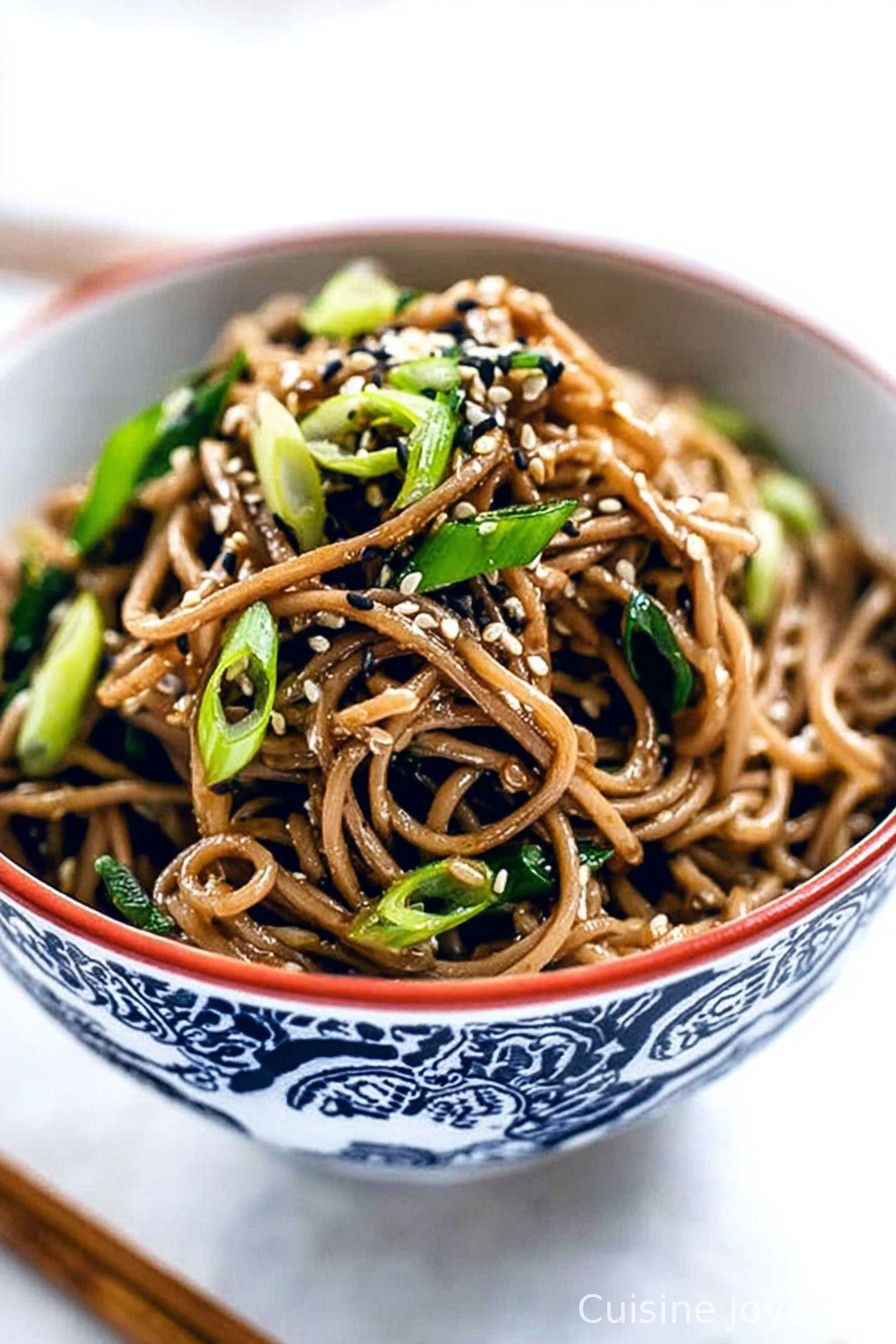
Some Notes from My So-Called “Tests”
- If you try to skip rinsing soba, it always gets weirdly sticky. Not sure why, but it does.
- I once tried peanut butter instead of sesame oil. Didn’t hate it, but, um, not quite the effect I was going for.
- The sauce soaks into the noodles if you let it sit, which I actually prefer, but it does thicken up a bit so maybe add a dash of water before serving next day.
- I can never cut my cucumber as neatly as the folks on TV. And frankly, nobody cares.
All the Weird Variations I’ve Tried
- Swapped cucumber for thinly sliced apple once—oddly refreshing but daughter voted it “kinda weird, Mum.”
- Once accidentally used balsamic instead of rice vinegar. Too strong. Just…don’t.
- Added roasted mushrooms and it totally worked, but I rarely bother if I’m in a hurry.
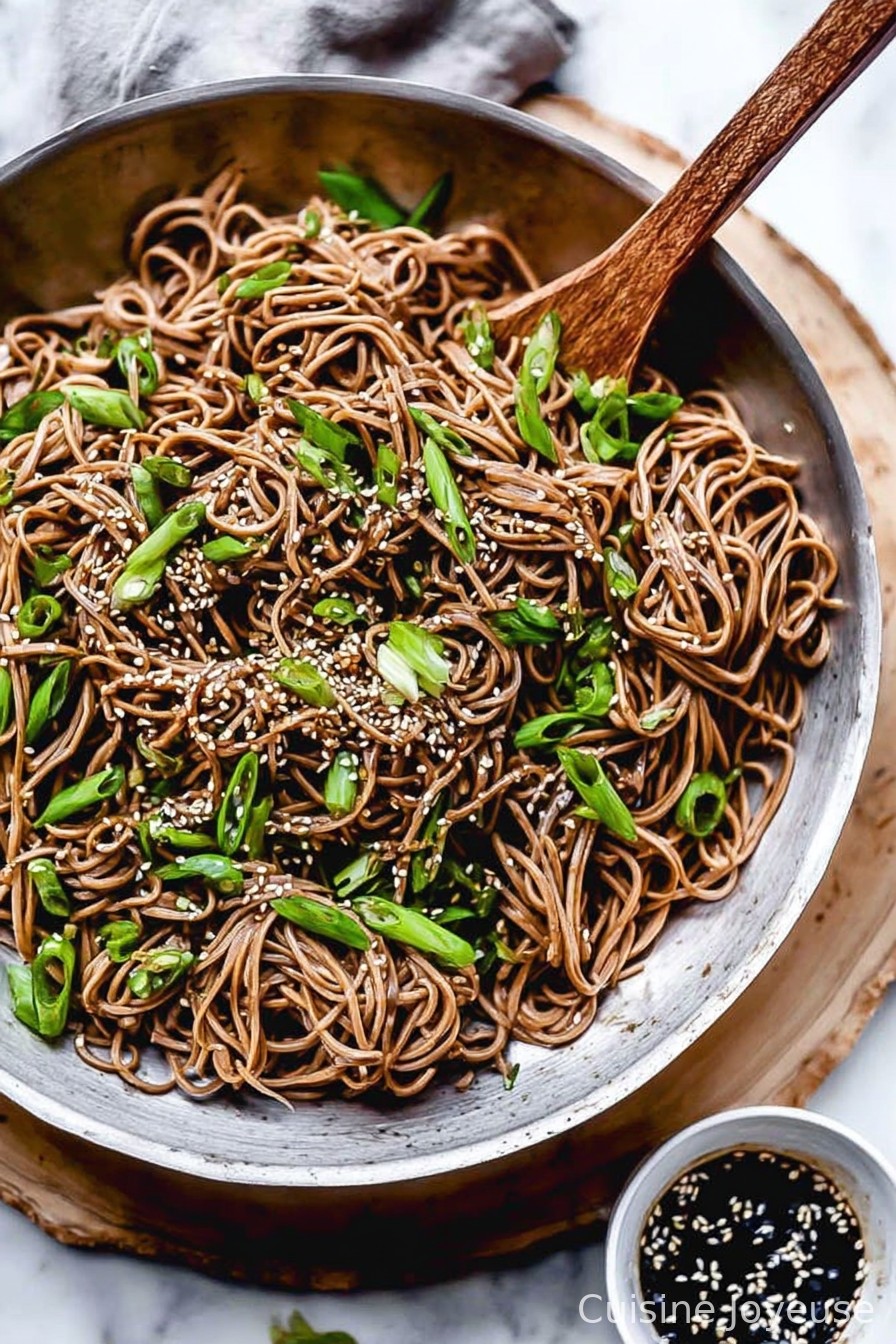
Quick Chat About Equipment
You really just need a pot and a bowl. A whisk is handy, but I’ve just shaken the sauce up in a jar too; works fine. No fancy gadgets needed, but if you’ve got a noodle strainer, go wild. Trust me, I’ve done this with nothing but a fork and a colander in a student kitchen before—melon baller absolutely not required.
How To Store Your Leftovers (If There Are Any…)
Just pop any spare noodles in a tightly sealed container in the fridge. Next day? They taste even better, I think. Add a splash of water to loosen them up if they feel a bit stodgy. That said, they never seem to last beyond lunch in my house, so, maybe just make extra?
How We Serve ‘Em (Plus Random Traditions)
Most nights, I pile the noodles up in big bowls and hand out chopsticks—it’s the only time my kids race to the table. Sometimes I drop a fried egg on top for some extra oomph, or a little side of pickled ginger. A glass of cold beer for the grown-ups goes down a treat. Actually, I once tried serving them as a salad at a BBQ; not sure it totally worked, but people seemed happy enough.
What I’ve Learned: Pro Tips You Probably Needed
- Don’t rush the crispy garlic. I tried cranking up the heat once—ended up with sad, bitter crumbs. Better to go slow.
- If the noodles clump together, just toss ‘em with a drop more sesame oil before adding sauce. Works like a charm.
- Seriously, use cold water to rinse. It’s worth the extra minute, promise.
FAQs: Real Questions (Honestly, People Ask These)
- Can I make this gluten-free?
Yep, but check your soba noodles—they’re sometimes part wheat. 100% buckwheat ones exist, but cost a bit more. Or use rice noodles; not the same, but hey, it works! - Can I serve this warm instead of cold?
For sure; just skip the cold rinse and toss the hot noodles with sauce. The flavors won’t pop quite as much, but it’s definitely still good. - What veggies work best?
Cucumber and carrots are classic, but any crunchy veg is fair game. Bell pepper, snap peas—whatever’s lurking in the fridge. I mean, you gotta use it up, right? - Help! My sauce is too thin/thick.
If it’s too thin, just let it sit a bit longer, the noodles will soak it up. Too thick? Splash in a little water or extra vinegar. Didn’t say this was science.
Anyway, enough rambling. Trust me—once you’ve made these Sesame Soba Noodles, you’ll keep coming back (even on sock-losing, lazy evenings!).
Ingredients
- 225g dried soba noodles (buckwheat, but I’ve cheated with spaghetti—nobody ever guesses)
- 2 tablespoons toasted sesame oil (sometimes I do a mix of sesame + mild olive oil if I’m running out; don’t tell anyone)
- 3 tablespoons soy sauce (grandma swore by Kikkoman, but I grab whatever’s cheapest nowadays)
- 1 tablespoon rice vinegar (or a generous squeeze of lime if my fridge is being difficult)
- 1 tablespoon honey (or maple syrup, which I’ll admit gives it a nice twist, though the kids notice)
- 2 teaspoons grated ginger (a knobbly thumb-sized piece; powder in a pinch, but fresh is totally worth it)
- 2 garlic cloves, thinly sliced (okay sometimes I get lazy and use the jar stuff—shhh!)
- 1 small cucumber, julienned (carrot strips also work, or whatever veg needs using up)
- 2 spring onions, thinly sliced
- 1 handful fresh coriander leaves (or skip if you’re not a fan; parsley kinda works in a pinch but it’s…different?)
- Generous sprinkle of toasted sesame seeds
- Optional: chili flakes, shredded roast chicken, or tofu for extra protein
Instructions
-
1Bring a big pot of water to a boil, and add the soba noodles. Cook according to the package—usually about 4-5 minutes. You want them just soft but not mushy. Rinse them under cold water to stop the cooking (and get rid of extra starch—it makes them much less gloopy!).
-
2While the noodles cool, whisk together sesame oil, soy sauce, rice vinegar, honey, and grated ginger in a largish bowl. This is where I usually taste, realize I forgot the soy sauce, and add it in with a flourish.
-
3Heat a little more sesame oil in a small pan and fry the garlic slices until golden and crispy. Careful—they go from golden to burnt in about ten seconds, trust me, I’ve been there. Lift them out and let them drain on some paper towel.
-
4Tip the rinsed noodles into the sauce bowl, toss to coat. It may look too runny at first, but it thickens up—don’t panic.
-
5Add cucumber, spring onions, coriander, and toss again. I occasionally add a bit more soy or a sprinkle of chili flakes here, depends on the day.
-
6Top with crispy garlic and a good sprinkle of toasted sesame seeds. If you’ve got some roast chicken left from last night, or a few cubes of tofu, throw those on. Or not—totally your call.
Approximate Information for One Serving
Nutrition Disclaimers
Number of total servings shown is approximate. Actual number of servings will depend on your preferred portion sizes.
Nutritional values shown are general guidelines and reflect information for 1 serving using the ingredients listed, not including any optional ingredients. Actual macros may vary slightly depending on specific brands and types of ingredients used.
To determine the weight of one serving, prepare the recipe as instructed. Weigh the finished recipe, then divide the weight of the finished recipe (not including the weight of the container the food is in) by the desired number of servings. Result will be the weight of one serving.
Did you make this recipe?
Please consider Pinning it!