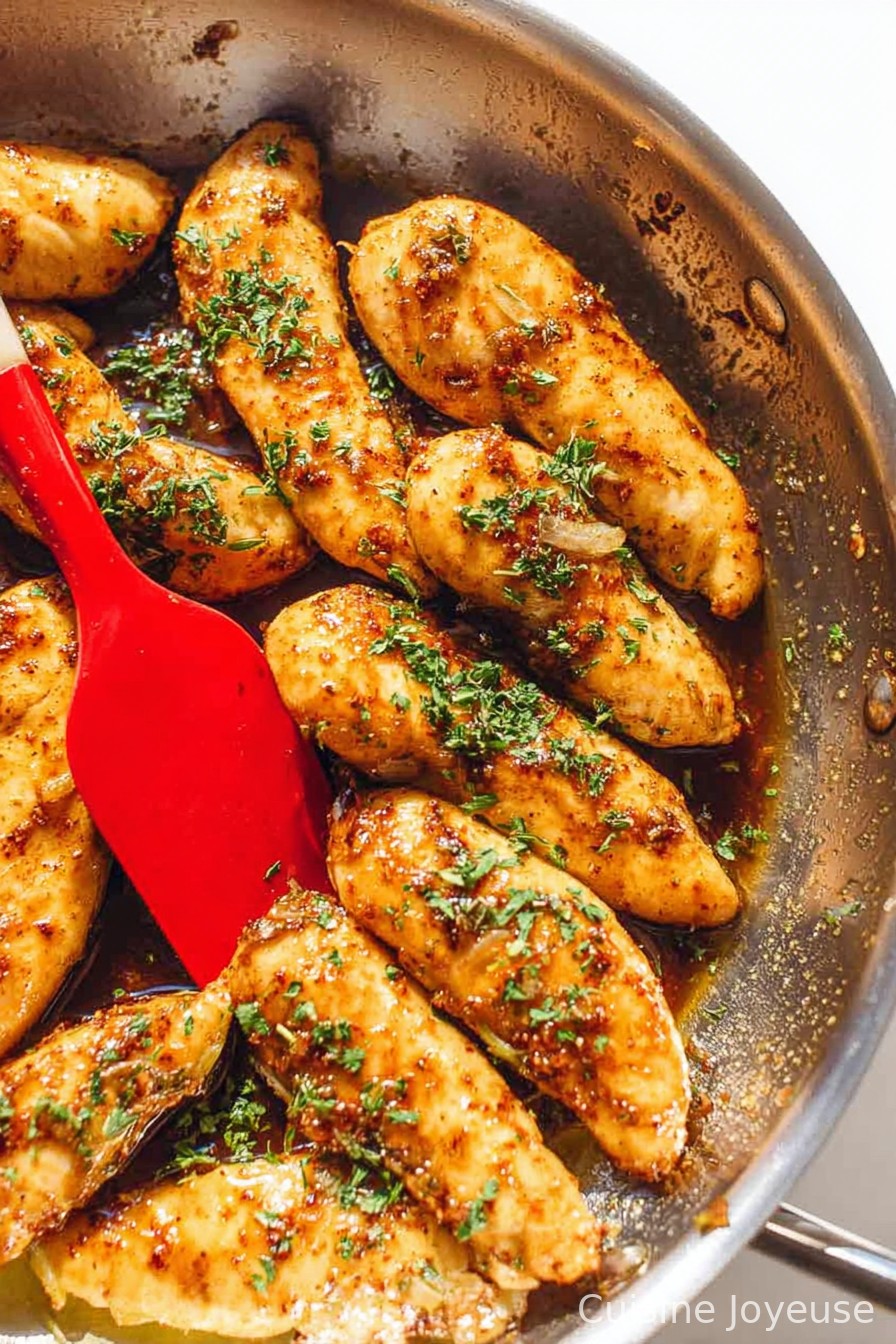
Garlic Butter Chicken Tenders
Alright, full disclosure: Garlic Butter Chicken Tenders are the kind of meal I make when I want to seem like I’ve got my act together but, honestly, I’m just hangry and don’t have the patience for a fancy dinner. The first time I whipped these up, my youngest refused to eat anything else for a whole week (which, looking back, was actually a blessing since I didn’t have to argue about broccoli). Anyway, if you need something that’s fast, comforting, and makes your kitchen smell amazing, you’re in the right place. Just don’t judge me for occasionally doubling the butter… it must be genetic.
Why I Keep Coming Back to These
I make this when I want everyone at the table to be happy. My sister comes over “unexpectedly” whenever she hears I’m cooking them (she pretends it’s a coincidence—sure, Jess). My family goes mad for this because it’s got that buttery, garlicky magic working for it, but also because it pulls together fast—sometimes I even toss them on a salad if I’m feeling like balancing my karma. Oh, and I used to get super annoyed trying to keep them juicy until I realized you genuinely don’t have to overthink it. Seriously, you can kind of wing it if your timer’s busted.
The Not-So-Fancy Ingredients
- 500g (about a pound) chicken tenders or boneless chicken breast sliced into strips (sometimes I use thigh meat—it’s juicier, but it’s your call)
- 4 tablespoons unsalted butter (Grandma always said Kerrygold, but any kind works, really)
- 5 garlic cloves, minced (when I’m lazy, garlic powder saves dinner)
- 1 teaspoon paprika (I’ll admit I once used smoked—very different vibe, but still tasty)
- Salt and pepper, to taste
- 1 tablespoon olive oil (or any cooking oil—sunflower works in a pinch)
- Optional: pinch of Italian herbs, squeeze of lemon, or even a dash of chili flakes if you’re feeling spicy
So, Here’s How I Actually Make It
- Pat the chicken dry with some kitchen roll. This step is more important than you’d think—if you skip it, you get soggy tenders. Ask me how I know.
- Season the chicken with salt, pepper, paprika, and (if you’re adventurous) Italian herbs. Give it a little toss—sometimes with my hands if I’m feeling rustic. Or, you know, lazy.
- Heat a big frying pan or skillet over medium-high and throw in the olive oil and half the butter. Wait until it’s all melted and starting to get a bit bubbly.
- Lay the chicken strips in the pan in a single layer. Don’t overcrowd it (unless you like half-steamed chicken… not great). Sear for about 2-3 minutes each side. Sometimes at this point, I sneak a taste. You should too.
- Add the rest of the butter and the minced garlic—stand back a bit, the smell’s amazing but can be intense for a second. Cook, swirling the pan, until the garlic looks golden and your house starts to smell like you know what you’re doing. (If it looks a bit weird here—don’t panic, it sorts itself out.)
- If you want a bit of tang, squeeze in a little lemon now. This is optional; I only remember half the time.
- Take the pan off the heat as soon as the chicken’s cooked through, and let them rest for a minute (more flavor magic apparently happens here—but who knows, really?).
The “I Learned This the Hard Way” Notes
- If you use pre-minced jarred garlic, just go easy—it’s got a kick but not in a good way if you use too much. Fresh is more forgiving.
- I once tried to cut down on butter. Didn’t taste as good. If you’re trying to be ‘healthy’, just do it another night. Or not, I don’t judge.
- Chicken thighs do stay juicier, but, honestly, anything works if you don’t dry them out.
Mixing It Up (Sometimes It Works, Sometimes…)
- I tried this once coated in crushed cornflakes before frying, and it was oddly like a midwestern potluck—still good, just much crunchier.
- Parmesan stirred into the butter before pouring it over? Brilliant. Highly recommend.
- I once added rosemary instead of Italian herbs. My family didn’t love it, but you might?
Stuff You’ll Need (and a Hack or Two)
- Big frying pan or skillet—nonstick makes it way less stressful, but I’ve done it in a battered old stainless one, just had to watch the sticking
- Sharp kitchen knife, unless you fancy wrestling with your chicken all night
- I use proper tongs, but a regular fork works—just don’t burn yourself flipping the chicken

How to Store (Though Honestly, It’s Gone Immediately)
If, by some miracle, there are leftovers, they keep in an airtight box in the fridge for up to two days. Heat gently in a pan or zap in the microwave (though they do get a touch rubbery, just being honest). Honestly, in my kitchen, these disappear faster than good coffee on a Monday morning.
What I Like to Serve These With
Personally, I reckon they’re best with a side of mashed potatoes—something about the buttery chicken dripping onto the mash just hits the spot. But my kids demand chips (fries, for my friends across the pond). Sometimes I pile them over rice with a handful of spinach so I can pretend it’s a health food. Oh—garlic bread as a side is overkill, but hey, I’ve done it.
If I Could Remember Only One Thing (Pro Tips!)
- I once tried rushing the whole thing by cranking the heat up. Ended up with chicken tough as old boots. Take your time—it’ll still be quick, but way tastier.
- Don’t walk away, even for a minute—garlic burns fast, and then the whole house smells like burnt popcorn (it’s… not great).
- Actually, I find it works better if you let the chicken rest for a couple of minutes so it stays juicy—learned that the hard way after several dry batches.
Real Questions I’ve Actually Been Asked
- Can I use margarine?—Uh, yes, technically, but the flavor’s way milder. Butter’s worth it here, in my (probably biased) opinion.
- Do I have to use fresh garlic?—Nope! Garlic powder works if it’s what you’ve got, just use about a teaspoon instead of the fresh stuff. It’s not quite the same, but still yum.
- How do I make this spicier?—Easy, toss in some chili flakes or even a bit of sriracha. I tried a whole jalapeño once. Mistake! Half is plenty.
- Is this good cold?—Honestly, yes! I sometimes eat the leftovers straight from the fridge (don’t judge), especially tucked in a wrap with lettuce.
- Where do you find really good chicken?—I like to get mine form a local butcher, but if you need mail order, Crowd Cow has some amazing options. I also sometimes grab the organic ones from Whole Foods if I’m at the store.
And if you’re on the hunt for more quick dinner ideas that won’t leave you with a mountain of dishes, have a look at Budget Bytes. Her recipes have bailed me out plenty of nights!
Last thing—sometimes, if I’m especially distracted (or, okay, if a new show is on and I’m half-watching TV), I might forget a step; doesn’t really matter, these tenders are real forgiving. Give it a go—and if you have leftovers, let me know what weird combo you ate them with!
Ingredients
- 1 lb chicken tenders
- 2 tablespoons olive oil
- 3 tablespoons unsalted butter
- 4 cloves garlic, minced
- 1 teaspoon paprika
- 1/2 teaspoon salt
- 1/4 teaspoon black pepper
- 1 tablespoon fresh parsley, chopped
- Lemon wedges, for serving
Instructions
-
1Pat the chicken tenders dry with paper towels and season both sides with paprika, salt, and black pepper.
-
2Heat olive oil in a large skillet over medium-high heat. Add chicken tenders and cook for 3-4 minutes on each side until golden and cooked through. Remove chicken from the skillet and set aside.
-
3Reduce heat to medium. Add butter to the skillet and let it melt. Stir in the minced garlic and cook for 1 minute until fragrant.
-
4Return the chicken tenders to the skillet and spoon the garlic butter sauce over them. Cook for an additional 2 minutes to combine flavors.
-
5Garnish with fresh parsley and serve immediately with lemon wedges.
Approximate Information for One Serving
Nutrition Disclaimers
Number of total servings shown is approximate. Actual number of servings will depend on your preferred portion sizes.
Nutritional values shown are general guidelines and reflect information for 1 serving using the ingredients listed, not including any optional ingredients. Actual macros may vary slightly depending on specific brands and types of ingredients used.
To determine the weight of one serving, prepare the recipe as instructed. Weigh the finished recipe, then divide the weight of the finished recipe (not including the weight of the container the food is in) by the desired number of servings. Result will be the weight of one serving.
Did you make this recipe?
Please consider Pinning it!!