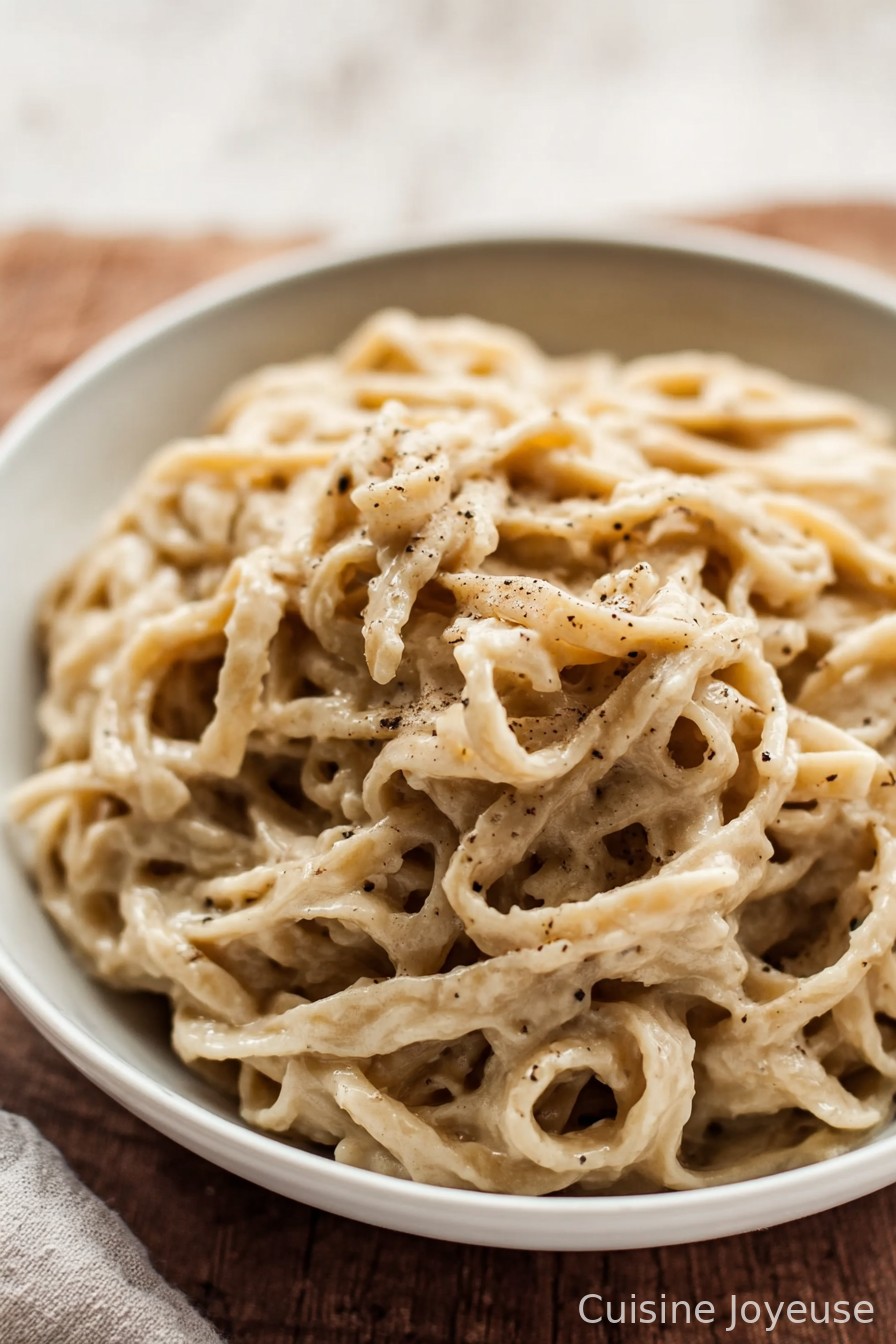
Creamy Nut-Free Vegan Cacio e Pepe Recipe
When Pasta Calls, I Answer (Even If the Fridge Is Bare)
Picture this: it’s Tuesday, it’s raining buckets (like seriously, did someone order a monsoon?), and all I want is the comfort of an ultra-creamy, peppery bowl of cacio e pepe. Only catch? Can’t do nuts. Long story involving a distant cousin, a rogue cashew, and an awkward phone call. Anyway, that’s how this Creamy Nut-Free Vegan Cacio e Pepe Recipe was born! I cobbled it together out of necessity, but honestly, it’s now my go-to and no one in my house seems to mind the lack of fancy cheese—or that it’s vegan. And if you catch me eating leftovers for breakfast, no you didn’t.
Why This Dish Is on Repeat (At Least in My Kitchen)
I make this, honestly, whenever the craving strikes and the cheese drawer is looking a bit tragic. My family goes a bit bananas for it (especially the little one, who refers to it as “special pepper noodles,” which is way cuter than anything I came up with). And for what it’s worth, I used to really miss that classic cheese flavor, but this sneaky sunflower cream actually nails it! Only mild frustration: the temptation to keep tweaking the pepper level, but that’s mostly because I like mine extra fiery and they… don’t.
Real talk: if you want creamy pasta with basically zero fussing about nuts, this recipe’s your new friend. Or, at least, your Wednesday night backup plan.
Pasta Lineup (Plus What I’ve Subbed in a Pinch)
- Pasta: 400g spaghetti, linguine, or whatever you’ve got. I once used wholewheat penne just because that’s all that was left and it was… fine.
- Unsweetened oat milk: 1 1/2 cups (360ml). Soy works in a pinch, but almond is a no-go for my crowd.
- Sunflower seeds: 3/4 cup, soaked (raw, not roasted; my gran swore by Brand X, but let’s be real, they’re all pretty simillar)
- Nutritional yeast: 1/4 cup. “Nooch” if you’re feeling hip. Or skip for a milder vibe.
- Olive oil: 2 Tbsp, or vegan butter if you’re feeling extra.
- Freshly cracked black pepper: At LEAST 2 tsp, or more if you like to live dangerously
- Salt: To taste. But don’t go wild—no one’s winning a salt-lick contest here.
- Lemon juice: About 2 tsp for some zing (sometimes I go a bit heavier if my lemons are sulking in the fruit bowl)
- Garlic powder (optional): 1/2 tsp. Honestly, not traditional at all, but garlic makes most things better, right?
- Starch: 1 Tbsp tapioca starch or cornstarch. Potato starch works too—on second thought, I like that texture even more sometimes.
Let’s Get Saucy: How This Comes Together
- First up, set a big pot of water boiling for your pasta. Salt it generously, unless you enjoy bland noodles. Add pasta and cook to your preferred doneness (I occasionally lose track and go past al dente, and you know what? It’s still good!).
- While that’s bubbling away, grab your soaked sunflower seeds (I soak for an hour or so, but if you forget, boiling them for 10 min gets the job done). Pop them in a blender with oat milk, nutritional yeast, olive oil, lemon juice, starch, garlic powder (if you want), and a hefty pinch of salt. Blitz till it’s utterly smooth. This is where I usually have a tiny taste—sometimes I add an extra glug of oil, especially if the sauce looks too thick.
- Drain your pasta, save a mugful of starchy water—it’s magic for sauces, trust me! Pop the pasta back in the pot. Pour in the sauce and 2/3rds of your black pepper. Stir like you mean it, over low heat. If it looks like wallpaper paste—don’t panic! Add some of that pasta water bit by bit till it turns glossy and silky. Takes maybe 3 to 5 minutes.
- Final step: shovel into bowls, hit with the rest of the pepper, maybe a little extra oil if it’s looking shy, and eat before anyone else claims your portion.
Mistakes? Oh, I’ve Made a Few (But That’s How We Learn)
- If you forget to soak seeds, hot water saves the day (ten minute soak, or microwave ‘em—works in a pinch, just don’t forget again like I always do)
- Once, I got distracted—Netflix, don’t judge— and blended the sauce for ages. Oddly, it was creamier! Don’t know if that was magic or just luck.
- I keep trying it with different plant milks, and oat really does taste best to me. Rice milk ended up oddly sweet, so…maybe not.
Pasta Curveballs: What Else I’ve Tried (Good and Not-So-Good)
- Miso Magic: Once I chucked in a teaspoon of mellow miso. It gave the sauce a crazy umami boost! Just go easy or you’ll get miso overload.
- Chili Flakes: A solid addition if you crave heat. Supposed to be classic black pepper, but we’re among friends here.
- Avocado Swap: I blended in half an avocado once. Came out bright and green, which my kids found hilarious but my partner said, and I quote, “Let’s never do that again.” But hey—worth a try!
Equipment: Or, How I Survive with Just the Basics
I use a high-speed blender—makes the sunflower sauce dreamy smooth. But if you don’t have one, a food processor does the trick with a bit more patience (you might get the odd tiny seed bit, but it’s rustic, right?). No colander? Tilt the pot and risk it (though maybe don’t blame me if you lose a couple of noodles down the sink).
Stashing Leftovers (Not That There’s Ever Much Left)
This is lovely tucked away in an airtight box in the fridge—will keep 2-3 days, though honestly, in my house it never lasts more than a day! If it thickens up, splash a bit more oat milk or water before reheating. Cold cacio e pepe? Weirdly tasty, like a pasta salad with attitude.
Serving—The Best Bit. How I Like It
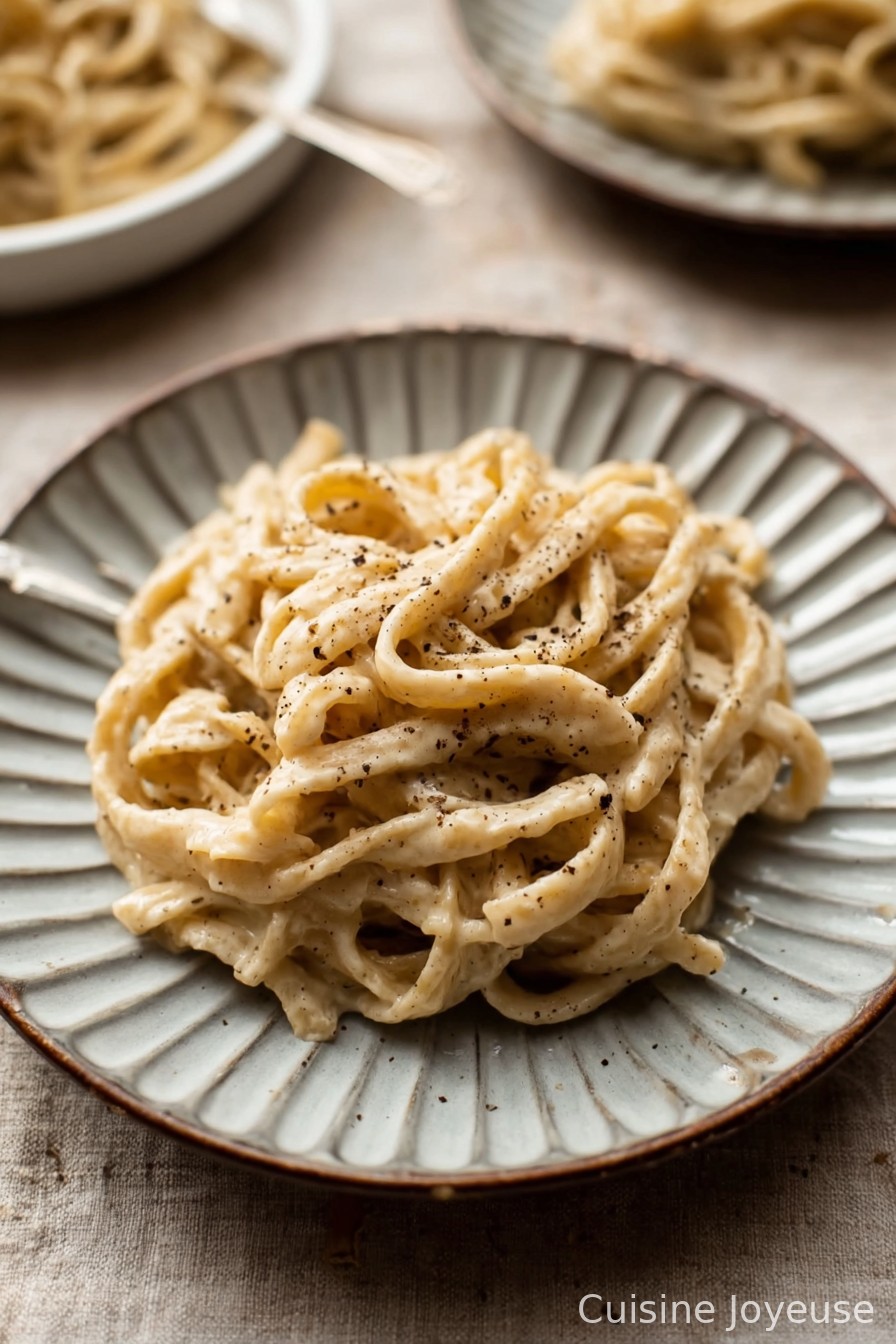
Serve big, steaming mounds with extra black pepper over the top (no such thing as too much, I say). I love it with a quick rocket salad—sometimes with a handful of capers, other times just whatever’s left in the veg drawer. And garlic bread on the side, if we’re feeling fancy (or someone’s had a rough day—comfort food rules).
Honestly Useful Pro Tips (Learned the Hard Way)
- Don’t skip the pasta water—seriously, this is one thing everyone says and they’re right. I once tried using just tap water out of laziness, and, yeah, lesson learned.
- Blending too little = gritty sauce. Give it an extra 30 seconds more than you think.
- Let the sauce bubble gently but don’t boil it to death—it gets too thick and gluey (I did this once, had to eat it anyway, but wouldn’t recommend!)
FAQ—These Are Real Questions I’ve Actually Gotten
- Can I use pumpkin seeds instead of sunflower?
Yep, and it works fine, though the color’s a bit…odd. I like the taste but some folks find it a bit strong. - Is there a gluten-free version?
Absolutely, just swap in your fave GF pasta. Here’s a pretty solid round-up: The Viet Vegan’s gluten-free pasta test. - Do I have to use nutritional yeast?
You don’t. It adds a funky, cheesy vibe, but the sauce is still creamy and good without. - Can I freeze the sauce?
Technically, yes—I’ve done it when prepping ahead for busy weeks. Just whisk it after thawing, as it can separate. - What about extra protein?
Throw in chickpeas or grilled tofu pieces—I’ve even plopped in some leftover roasted broccoli. Not traditional but definitely tasty. For more ideas, I follow Lazy Cat Kitchen for vegan add-ins.
And that’s the whole shebang for my creamy, nut-free vegan cacio e pepe! If you end up making it—or tweaking it so much it’s barely recognizable—let me know. Cooking’s half improv in my kitchen anyway. Stay cozy, and keep your pepper grinder handy!
Ingredients
- 12 oz dried spaghetti or linguine
- 1 can (15 oz) white beans, drained and rinsed
- 1 cup unsweetened oat milk
- 2 tablespoons olive oil
- 1 tablespoon freshly ground black pepper
- 3 tablespoons nutritional yeast
- 2 garlic cloves, minced
- 1 teaspoon salt
- 1 tablespoon lemon juice
Instructions
-
1Cook the pasta according to package instructions in salted water until al dente. Reserve 1/2 cup of pasta water and drain the rest.
-
2While the pasta cooks, blend white beans, oat milk, nutritional yeast, lemon juice, and 1 teaspoon salt in a blender until perfectly smooth and creamy.
-
3In a large skillet, heat olive oil over medium heat. Add minced garlic and black pepper. Sauté for 1-2 minutes until fragrant.
-
4Pour the blended bean sauce into the skillet. Stir and cook for 2-3 minutes, allowing the sauce to thicken slightly. Add a splash of reserved pasta water if needed.
-
5Add drained pasta to the skillet. Toss until the pasta is evenly coated. Adjust seasoning to taste with more salt or black pepper if desired.
-
6Serve the pasta hot, topped with extra freshly ground black pepper and a sprinkle of nutritional yeast if desired.
Approximate Information for One Serving
Nutrition Disclaimers
Number of total servings shown is approximate. Actual number of servings will depend on your preferred portion sizes.
Nutritional values shown are general guidelines and reflect information for 1 serving using the ingredients listed, not including any optional ingredients. Actual macros may vary slightly depending on specific brands and types of ingredients used.
To determine the weight of one serving, prepare the recipe as instructed. Weigh the finished recipe, then divide the weight of the finished recipe (not including the weight of the container the food is in) by the desired number of servings. Result will be the weight of one serving.
Did you make this recipe?
Please consider Pinning it!!