Curry Udon Recipe
Let Me Tell You About Curry Udon (And That Time I Burned My Tongue)
So picture this: it’s drizzly out, you’re a bit knackered from work or errands, and all you want is something that feels like a hug, but from a bowl—not a person, because honestly who has the energy sometimes? This is when I make curry udon. I remember the first time I made it, I went way too fast, got so excited that I didn’t let it cool (rookie mistake), and burned my tongue so badly I barely tasted anything for the rest of the night. But even then, it was worth it. (My mate Liam still teases me about my ‘enthusiastic taste-testing style.’)
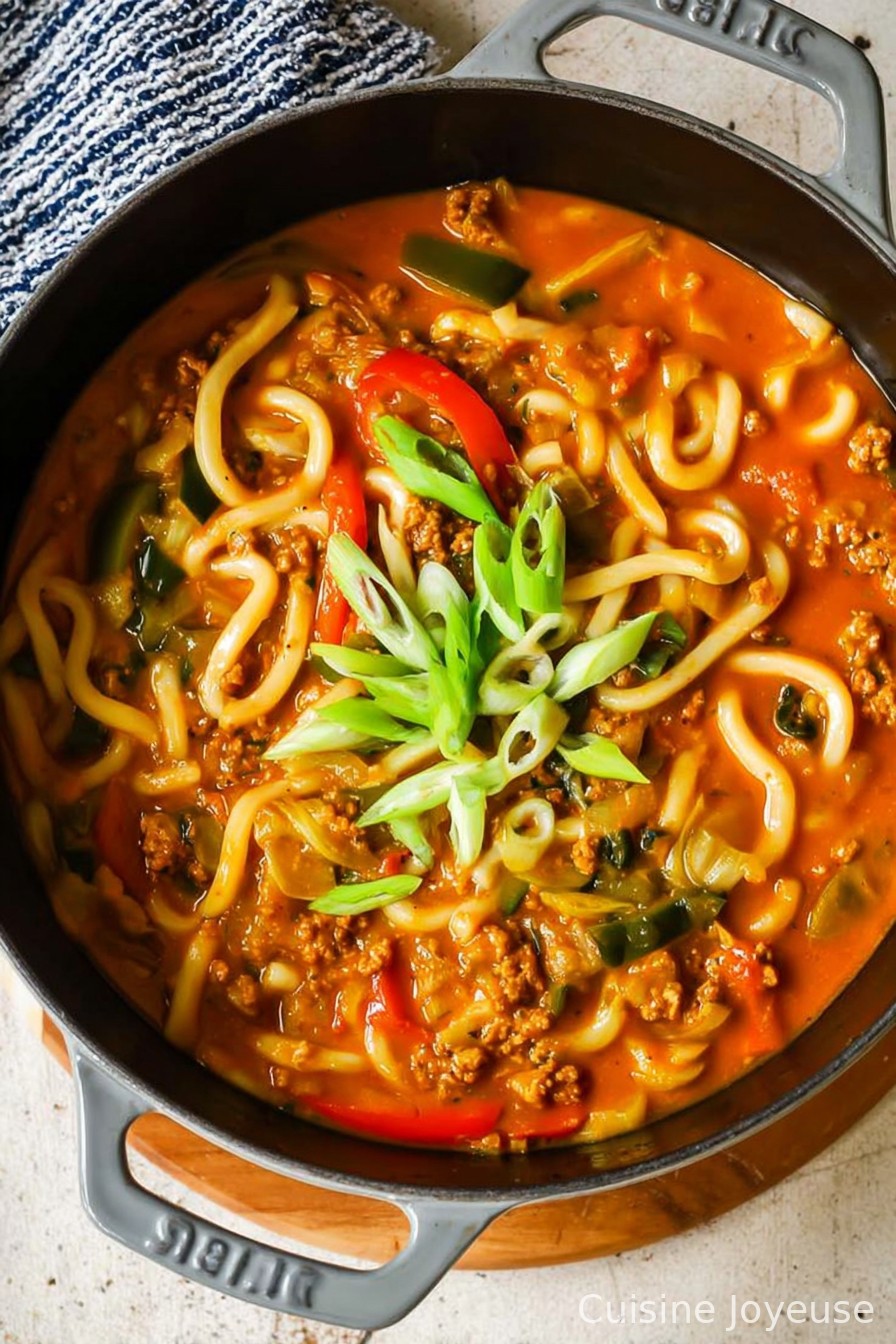
Why You’ll Like This Even If You Think You’re Not a ‘Soup Person’
I whip this up when I’ve got leftover veggies lurking in the crisper—I mean, what else do you do with half a sad carrot and one lonely potato? My family goes bananas for curry udon, especially if I add extra sliced green onions (my daughter tries to steal them right out of the pot). And if you’ve had a grim day, this tastes like actual comfort. (Admittingly, I have tried to shortcut it with pre-cooked noodles, but honestly it’s not the same…but maybe that’s just me being picky?)
What You’ll Need (And What I Swap When I’m Out of Something)
- 2 servings of udon noodles (frozen or refrigerated is best—dry works in a pinch, but, eh, not my favorite)
- 200g beef or chicken, thinly sliced—sometimes I just use tofu when feeling virtuous; leftovers from a roast work too
- 1 medium onion, sliced—red or yellow, doesn’t matter unless you’re asking my grandmother (she’d say yellow, but I can’t tell!)
- 1 small carrot, julienned—or hacked into rough chunks if you’re feeling lazy. I’ve also tossed in an old zucchini (don’t tell my kids)
- 1 small potato, diced (I sometimes skip if can’t be bothered)
- 2 cups dashi stock (okay, so homemade is lovely, but instant granules like Hondashi do just fine, cross my heart)
- 1 cup water (or just use all dashi if you’re richer in supplies than me)
- 1 tbsp soy sauce (more or less – I measure by the mood of the day)
- 1 tbsp mirin (sweet cooking sake – you could use a splash of regular sake + a pinch of sugar instead, or just extra soy sauce if desperate)
- 2 cubes Japanese curry roux (I’m partial to Vermont Curry brand, because, well, Vermont, but literally any will do. Or in a real pinch, I’ve used leftover curry from takeout!)
- Green onions, sliced thin (if you like a bit of green on top)
- Optional: a handful of mushrooms, a drizzle of sesame oil, or a boiled egg to be extra
How I Actually Make Curry Udon
- First thing: get a pot of water boiling for your udon noodles. This is the part where I inevitably forget and have to run back to reboil it. Cook udon according to the pack—frozen ones are quickest. Drain, rinse under cold water, and set aside (try not to eat them all just yet). If using dried, they do take a bit longer and feel chewier, just so you know.
- While that’s going, in a medium saucepan, sauté onions over medium heat until they’re a bit soft and translucent. Throw in carrot and potato. If you’re adding mushrooms (which I recommend when feeling fancy), toss those in too.
- Add your beef or chicken now and cook till it’s not pink. For tofu, I just add it right at the end ‘cause it’s delicate. If you ended up with leftovers from yesterday’s dinner, pop those in later to just heat through.
- Pour in dashi stock and water, bring it up to a gentle simmer. Give it a moment. This is where I almost always try a bit of the broth—so satisfying. Sometimes it tastes a bit, well, bland here, but don’t stress; the curry fixes that soon!
- Drop in the curry roux cubes. They dissolve slowly—stir them well or they sort of glop on the bottom. Add soy sauce and mirin, taste, and adjust if you want it saltier or a bit sweeter. Let everything bubble gently until the veggies are cooked through and the soup thickens. (Don’t worry if it looks cloudy or split for a minute, it sorts itself out.)
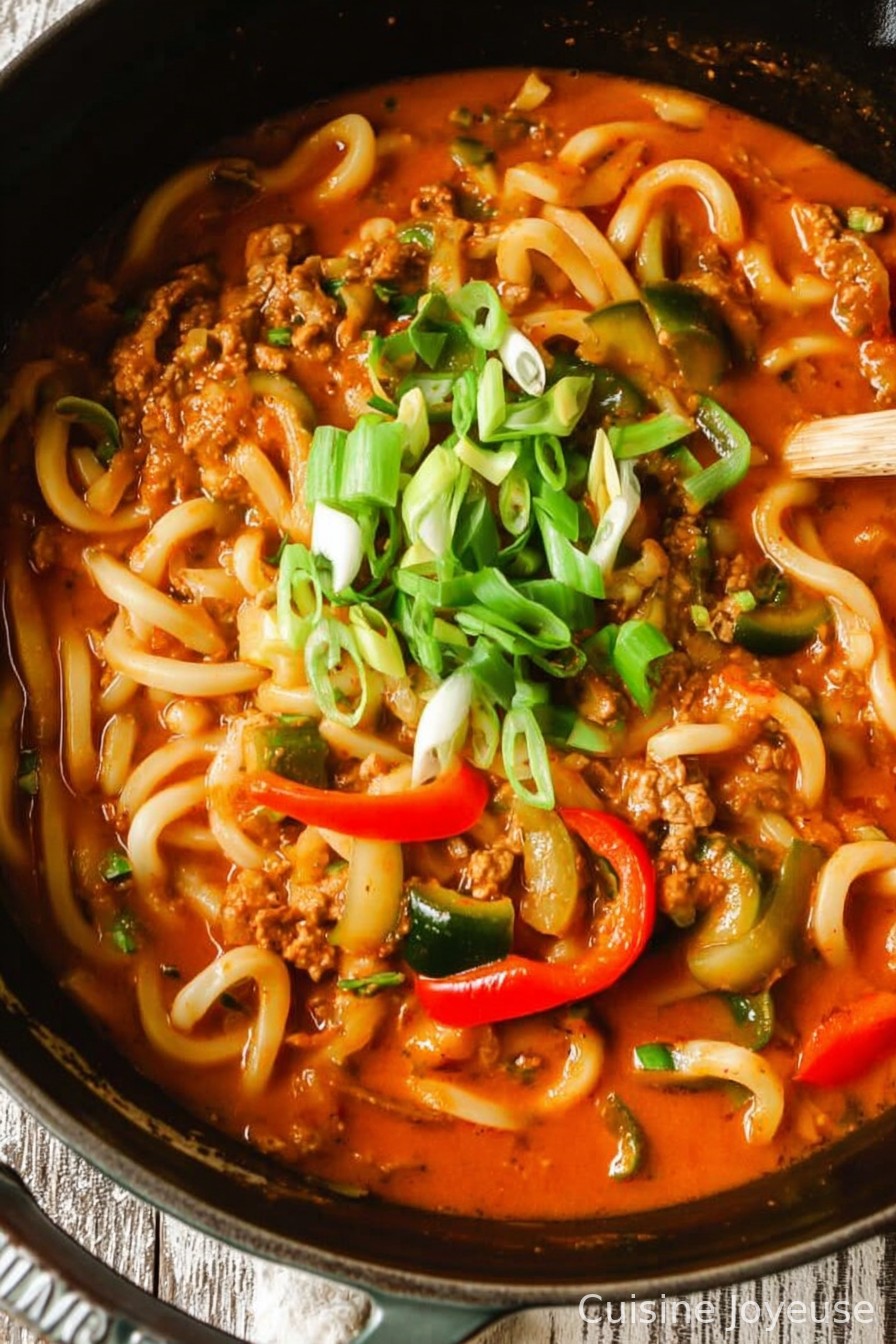
- Lastly, pile hot udon noodles into big bowls, ladle your thick curry gravy all over the top, and scatter green onions with abandon. Maybe a drizzle of sesame oil if you’re in the mood.
Things I’ve Learned (The Hard Way, Sometimes)
- If the broth seems too thick, just splash in more water; you can’t really mess this part up.
- Those curry cubes stain everything, so don’t wear a white shirt…unless you want a curry-spotted polka dot pattern, I guess.
- Honestly, it tastes even better the next day, which is rare for noodle dishes; maybe the magic happens overnight?
Things I’ve Tried—Some Great, Some…Not So Much
- Swapping out potatoes for sweet potatoes. Actually, not bad! A bit sweeter though—so maybe leave off the mirin if you try this.
- I once chucked in a bag of frozen stir fry veggies—wouldn’t recommend, unless you love soggy beans.
- Made it vegan! Just sub in mushroom dashi and tofu, maybe a few edamame beans for protein, and skip the curry block if it has meat extracts.
What You’ll Need Gear-Wise (And What to Do If You Don’t Have It All)
- Medium saucepan (if yours is too small, just make in two batches – not elegant, but it works)
- Strainer for the noodles—though, full confession, I’ve used a slotted spoon holding back the noodles with a wooden spoon before. Bit messy, but gets the job done.
- A decent knife—doesn’t have to cost the earth. My old chef’s knife is basically an extension of my arm (and a bit dull, oops)
How to Store Leftovers (Or, More Realistically, Why You Won’t Have Any)
I mean, technically you can refrigerate the curry sauce for 2-3 days and cook fresh noodles when you want more. But in my house, it’s gone by breakfast the next day (I caught my husband eating it cold, which is either genius or madness; jury’s still out).
How I Like to Serve It (Optional, But Highly Encouraged)
We each pile up a bowl with noodles, pour on the curry broth, and always—always—a fat sprinkle of green onions. Sometimes we have it with a side of quick pickles or just plain rice if I’ve made too much sauce (rare, but dreams do come true). My uncle used to throw a soft-boiled egg on top, which is just showing off but, wow, it’s good.
Things I Wish Someone Had Told Me (So You Don’t Make My Mistakes)
- Don’t try to rush dissolving the curry roux. I did that once, and instead of thick, glossy curry broth, I got a lumpy, grainy mess (still kind of tasty, though…)
- If you overcook the noodles, they go mushy in the bowl. Better a bit chewy, honestly.
- Be wary of crowding the pot—veg wants its space, just like people on a packed train.
Questions I’ve Genuinely Been Asked (Some More Than Once!)
- Can I use soba or ramen noodles instead?
- You can, and I have when I ran out of udon. But—just so you know—it tastes and feels kinda different. Still slurpable though!
- Is this spicy?
- Honestly, it’s milder than you’d expect. Most Japanese curry roux are on the sweeter side. But grab the ‘hot’ one if you’re brave, or add a pinch of chili flakes if you like a kick. Or not, up to you really.
- What if I can’t find dashi?
- I’ve used plain chicken stock before—different, but it more or less does the trick. Once I just used water and a splash of soy; actually, that wasn’t half bad, just a bit less umami oomph!
- My sauce got really thick—what did I do?
- Probably added too much roux or simmered too long (happens to the best of us). Splash in extra water, give it a good stir. It’ll be fine.
Okay, there you have it—my chatty, semi-coherent guide to proper comfort in a bowl. Make it your own and let me know if you invent a new twist I should try. Or just tell me if you burn your tongue; makes me feel less foolish!
Ingredients
- 400 g udon noodles (fresh or frozen)
- 200 g thinly sliced beef or chicken
- 1 large onion, sliced
- 2 medium carrots, peeled and sliced
- 2 cups dashi stock
- 1 1/2 tablespoons curry powder
- 2 tablespoons soy sauce
- 1 tablespoon mirin
- 1 tablespoon vegetable oil
- Salt and pepper to taste
- 2 green onions, finely chopped (for garnish)
Instructions
-
1Prepare udon noodles according to the package instructions. Drain and set aside.
-
2Heat vegetable oil in a large pot over medium heat. Add sliced onion and carrot, sauté until softened, about 3-4 minutes.
-
3Add thinly sliced beef or chicken and cook until the meat is no longer pink.
-
4Pour in dashi stock, soy sauce, and mirin. Sprinkle in curry powder, mixing well. Simmer for 10 minutes until the vegetables are tender and flavors meld. Season with salt and pepper.
-
5Add the cooked udon noodles to the curry broth and heat through for 2 minutes.
-
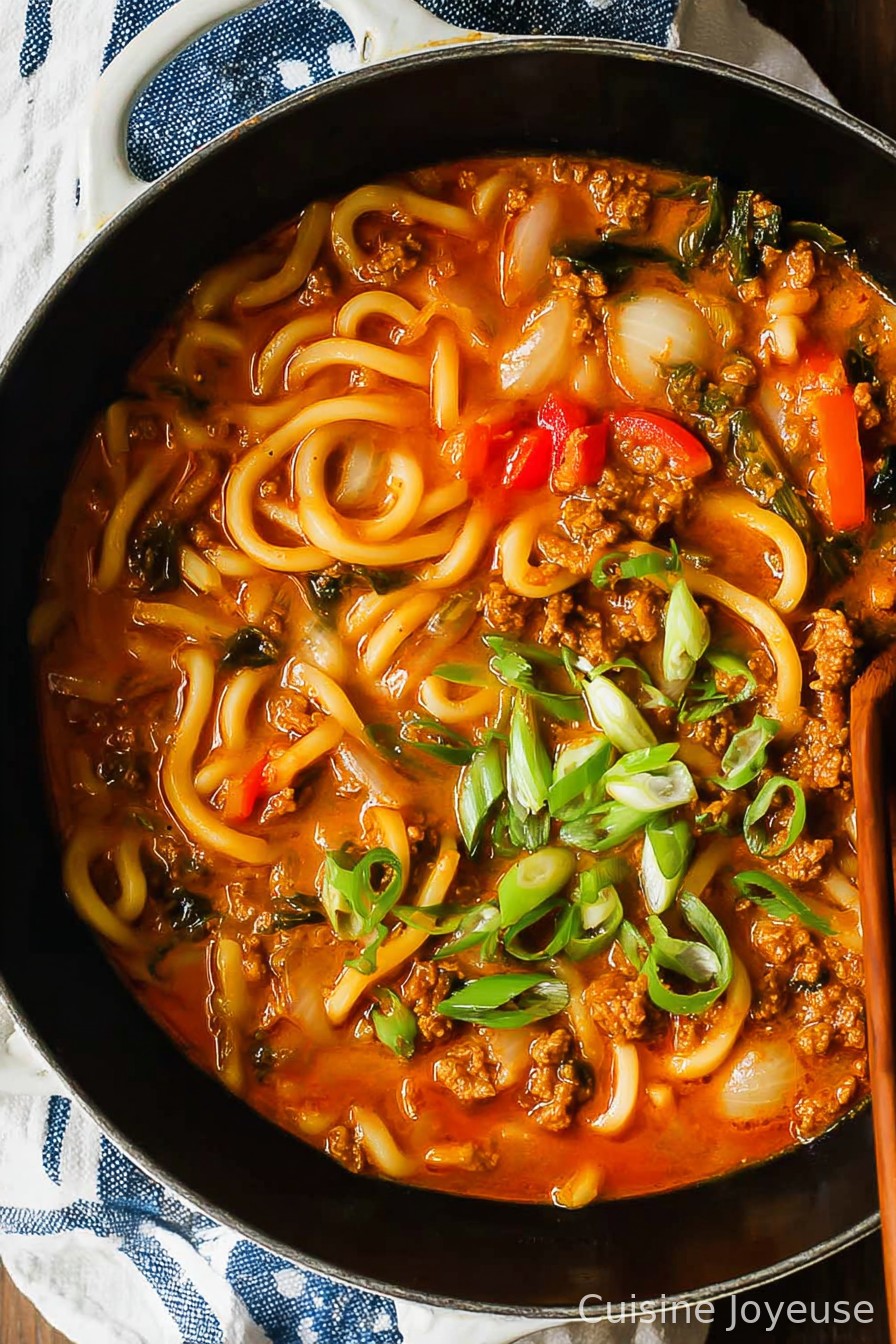
6Divide curry udon among serving bowls. Garnish with chopped green onions and serve hot.
Approximate Information for One Serving
Nutrition Disclaimers
Number of total servings shown is approximate. Actual number of servings will depend on your preferred portion sizes.
Nutritional values shown are general guidelines and reflect information for 1 serving using the ingredients listed, not including any optional ingredients. Actual macros may vary slightly depending on specific brands and types of ingredients used.
To determine the weight of one serving, prepare the recipe as instructed. Weigh the finished recipe, then divide the weight of the finished recipe (not including the weight of the container the food is in) by the desired number of servings. Result will be the weight of one serving.
Did you make this recipe?
Please consider Pinning it!!